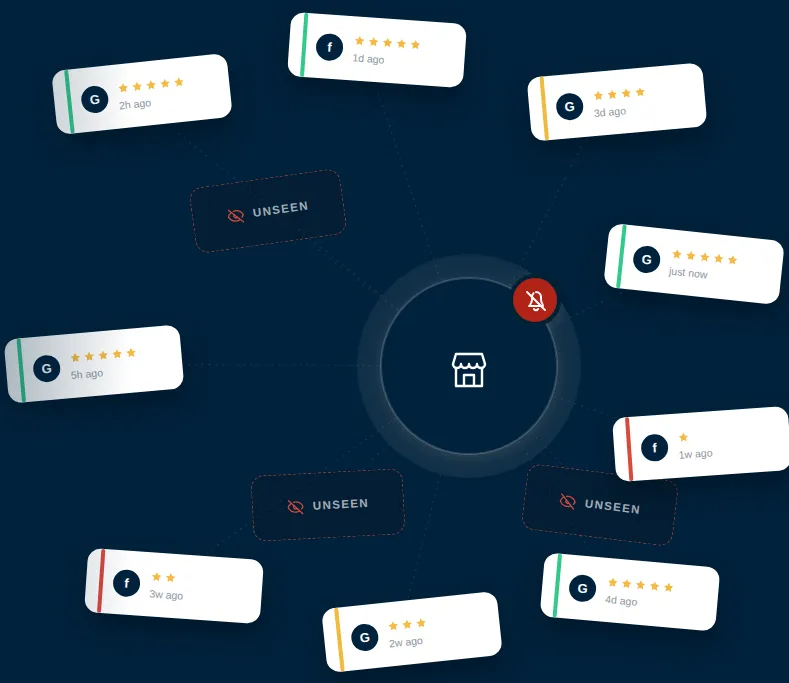
Your Reviews Are Too Old: Why a 4.8 From Last Year Loses to a 4.6 From Last Week
You have a 4.8 on Google. You earned every one of those stars.
So why are people still calling the company down the road with a 4.6?
Look at the dates. If your newest review is from last spring and theirs is from Tuesday, a lot of customers will pick them. Not because they're better, but because they look open, busy, and trusted right now.
Customers check the date, not just the stars
BrightLocal's 2026 Local Consumer Review Survey asked 1,002 US adults how they use reviews. On recency, the answers were clear:
74% look for reviews from the last three months.
32% look for reviews from the last two weeks, up from 20% a year earlier.
18% are only swayed by reviews from the last week.
Think about what that means. About a third of the people reading your profile are looking for something from the last 14 days. If your last review is from April, they see a business that might have changed owners, lost its best tech, or closed.
A stale profile raises questions you can't answer
When a customer sees old reviews, a few doubts creep in:
"Are they still in business?"
"Did something go wrong recently that they're hiding?"
"Why is nobody talking about them anymore?"
You know none of that is true. But the customer doesn't call to ask. They just pick the profile that looks active.
Fresh reviews also matter to Google. A steady stream of new reviews shows Google your business is active, and reviews are one of the signals behind where you show up on the map.
Why good businesses end up with old reviews
It's almost never because customers stopped being happy. It usually happens one of three ways:
Reviews came in a burst. You pushed hard for reviews once, got 30 in a month, then stopped asking.
The ask depends on memory. The tech means to ask, but it's the end of a long day.
The ask has too much friction. "Find us on Google and leave a review" loses most people. A direct link sent by text keeps them.
The fix: a steady flow, not a burst
Ten reviews spread across three months do more for you than ten reviews in one week followed by silence. Here's how to build the steady flow:
1. Ask every customer, every time.
Build it into the end of every job so it doesn't depend on anyone remembering. Ask everyone the same way, not just the customers you think are happy. Google's policies prohibit asking only satisfied customers for reviews.
2. Ask within a few hours.
The best time is right after the job is done, while the customer is still glad the problem is fixed.
3. Send a direct link by text.
One tap should take them straight to the review box on your Google profile.
4. Follow up once.
A single friendly reminder two or three days later catches the people who meant to do it and forgot.
5. Reply to every new review.
BrightLocal found 80% of consumers are likely to use a business that responds to all of its reviews. Replies also make your profile look active even between new reviews.
How to check yours in 60 seconds
Open your Google Business Profile and sort your reviews by "Newest." Then answer two questions:
How many reviews did you get in the last 30 days?
How many in the last 90 days?
Now do the same for the top 3 businesses that show up when you search your main service. If they're getting new reviews every week and you're getting one a month, that gap is costing you calls, no matter how good your rating is.
Want us to run the comparison?
We'll pull your review count, rating, and how recent your reviews are, side by side with your top 3 competitors, and show you what it takes to close the gap.
Get My Free Reputation Snapshot
Want the bigger picture on why star ratings matter more than ever? Read Nearly 1 in 3 Customers Won't Call You Under 4.5 Stars.


